
The Mistake Almost Everyone Makes First
The remote is the first thing people blame. It's small, it's battery-powered, and it's the part you're holding in your hand when the door doesn't open. So the natural move is to pop in new batteries, maybe buy a replacement remote off the shelf, and call it a day. It's an easy fix to attempt and it feels like progress.
But here's the problem with that instinct: if the wall button inside the garage also does nothing, the remote was never the issue. The wall button runs on a hard-wired connection straight to the opener, with no battery, no signal, and no line-of-sight to worry about. When both inputs get ignored at once, the fault lives somewhere the two systems overlap — usually power, a safety sensor, or the opener's internal electronics. Chasing the remote first just delays finding that.
What This Actually Looks Like
"Ignores the remote or wall button" isn't one single symptom. A technician will ask which version you're seeing, because each points somewhere different:
- Total silence — no light, no click, no hum, nothing happens at all when you press either control.
- A light comes on but the motor never engages — the unit has power, but something downstream is stopping it.
- You hear a click or a faint hum, then nothing — the motor is trying to start but can't complete the cycle.
- The opener's indicator light blinks a pattern — most modern openers flash an error code when a safety sensor is blocked or misaligned.
Noting which of these you're getting before you call anyone saves time, because it tells a technician roughly where in the system to start looking.
The Order a Technician Actually Checks
1. Power at the Unit
Before touching anything on the door itself, the first check is whether the opener is getting power at all. Garage circuits are frequently on GFCI outlets, and GFCI breakers are sensitive to the kind of humidity swings common along this part of the Gulf Coast — a muggy afternoon or a heavy downpour can trip one even without an obvious leak. The fix here is simply resetting the outlet or breaker, or checking for a loose plug that's vibrated free from the door's own movement over time.
2. Safety Sensor Alignment and Obstruction
Next comes the pair of photo-eye sensors mounted near the bottom of the track on each side of the door. If they're misaligned, dirty, or anything is blocking the beam between them, most openers will refuse to respond to either the remote or the wall button as a safety measure. Salt air and coastal humidity speed up corrosion on these sensor contacts and their mounting brackets, and afternoon storms can knock a bracket slightly out of alignment or leave moisture on the lens. The fix is wiping the lenses clean, realigning the brackets so both lights glow steady rather than blinking, and checking the low-voltage wiring for corrosion at the connection points.
3. Wall Button Wiring
If the sensors check out, the wiring between the wall button and the opener head is next. This thin wire runs along the garage ceiling or wall and is an easy target for a staple that's worked loose, a rodent, or corrosion at the terminal screws where moisture has crept in. A technician tests continuity along this run and either repairs a bad connection or replaces the wire and button outright, which is a straightforward fix.
4. Remote Programming and Interference
Only after power, sensors, and wiring are confirmed good does the remote itself get real attention — checking the programming, testing for interference from other devices on the same frequency, and confirming the opener's antenna hasn't been bent or buried inside a metal housing where it can't pick up a signal.
5. Logic Board and Internal Electronics
If everything upstream checks out and the opener still won't respond to any input, the circuit board inside the opener head is the likely culprit. Humidity and salt air are hard on these boards over years of service, and corrosion on internal contacts or a failed capacitor can cause exactly this kind of total non-response. This usually means replacing the logic board or, if the unit is older, replacing the opener entirely.
6. Motor and Drive Mechanism
Last on the list is the motor and gear assembly itself. A worn drive gear or a motor that's seized can produce a hum or click without ever lifting the door, which is why this gets checked after the electrical path has been ruled out rather than first.
When to Call Longboat Key Overhead Door Co
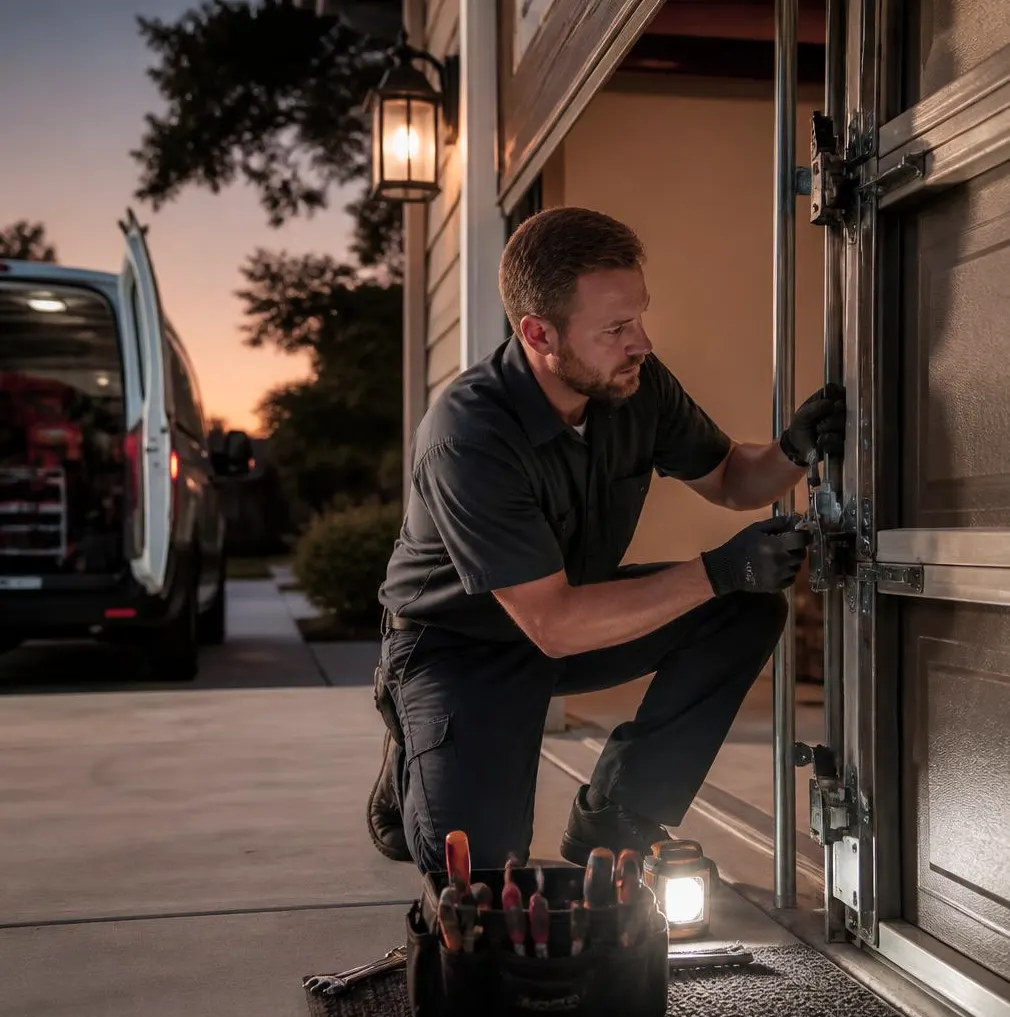
If you've reset the breaker, cleaned the sensor lenses, and you're still getting silence or a blinking error light, it's time to call. Our Garage Door Opener Installation technicians carry the diagnostic tools to test wiring, sensors, and logic boards on site rather than guessing, and if your current opener is corroded internally from years of coastal humidity, we can recommend a replacement rated for the conditions here instead of a like-for-like swap that fails the same way again. For openers that are still running but showing early signs of trouble, our Garage Door Maintenance & Tune-Up service catches sensor misalignment and wiring corrosion before they turn into a dead opener on a Saturday morning.
If your garage door in Longboat Key, Sarasota, Bradenton, or anywhere along this stretch of the Gulf Coast has stopped answering to the remote or the wall button, give Longboat Key Overhead Door Co a call and we'll get it sorted out right.